The Dutch occupation of Northeast Brazil in the seventeenth century is not widely known internationally. In Brazil, however, it is often romanticized as a period of progress and development, especially when contrasted with Portuguese colonization. Yet, like other colonial ventures, Dutch Brazil was ultimately a commercial enterprise driven by profit and sustained through exploitative and inhumane practices.
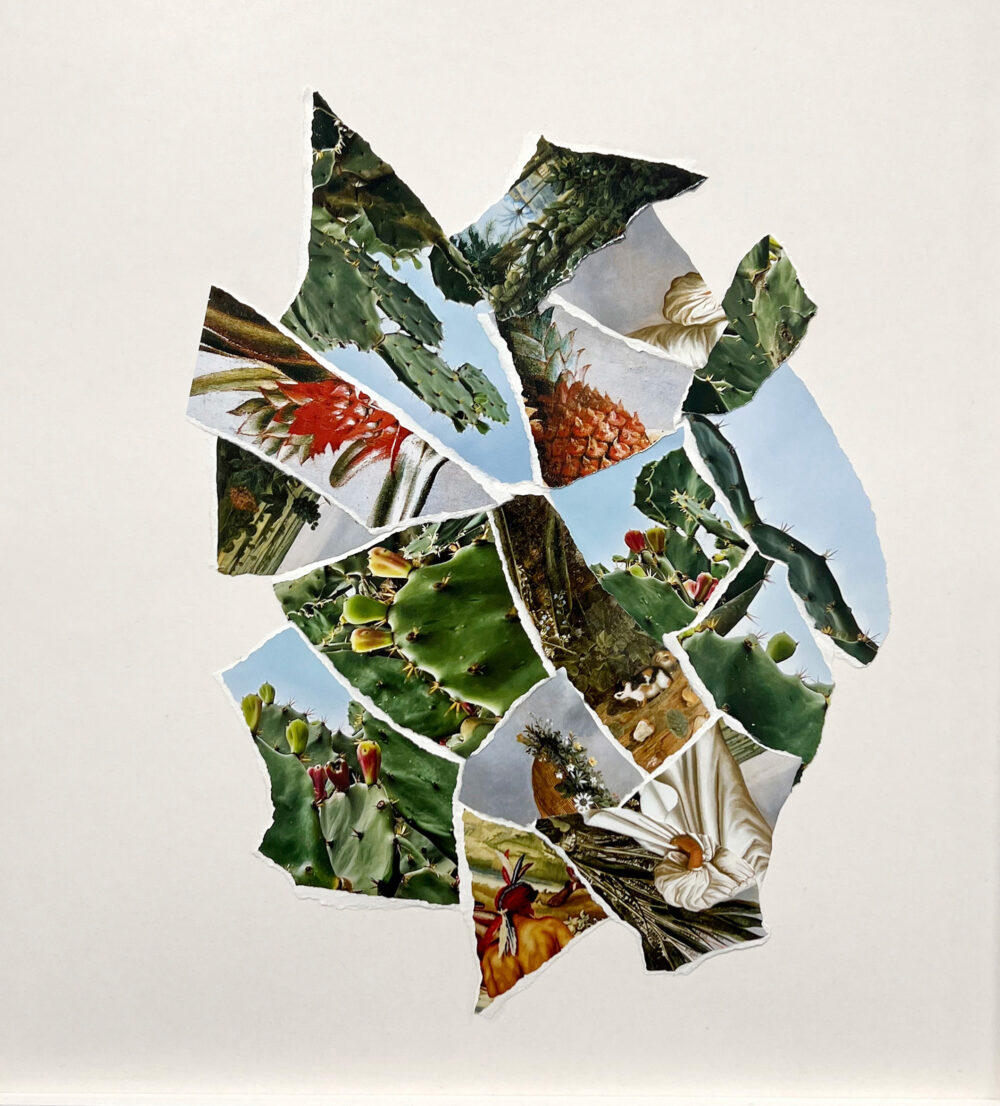
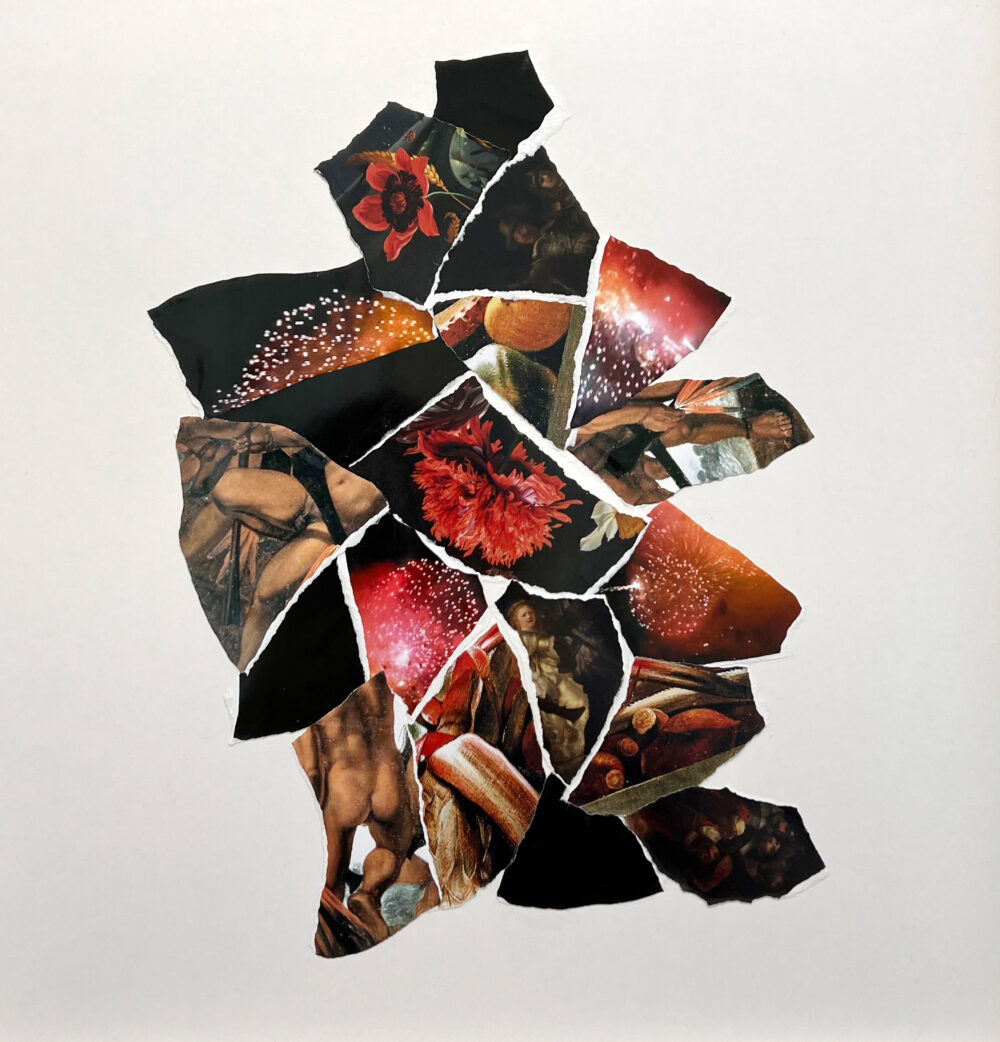
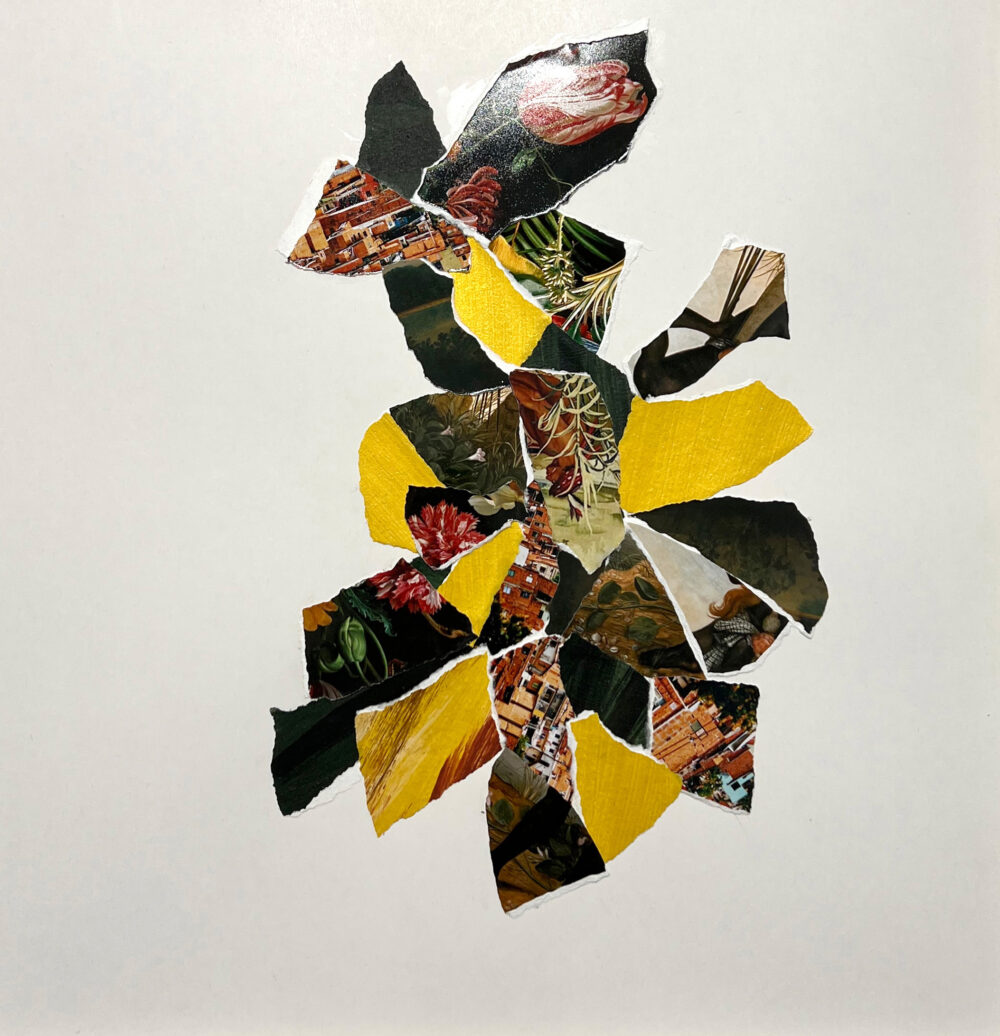
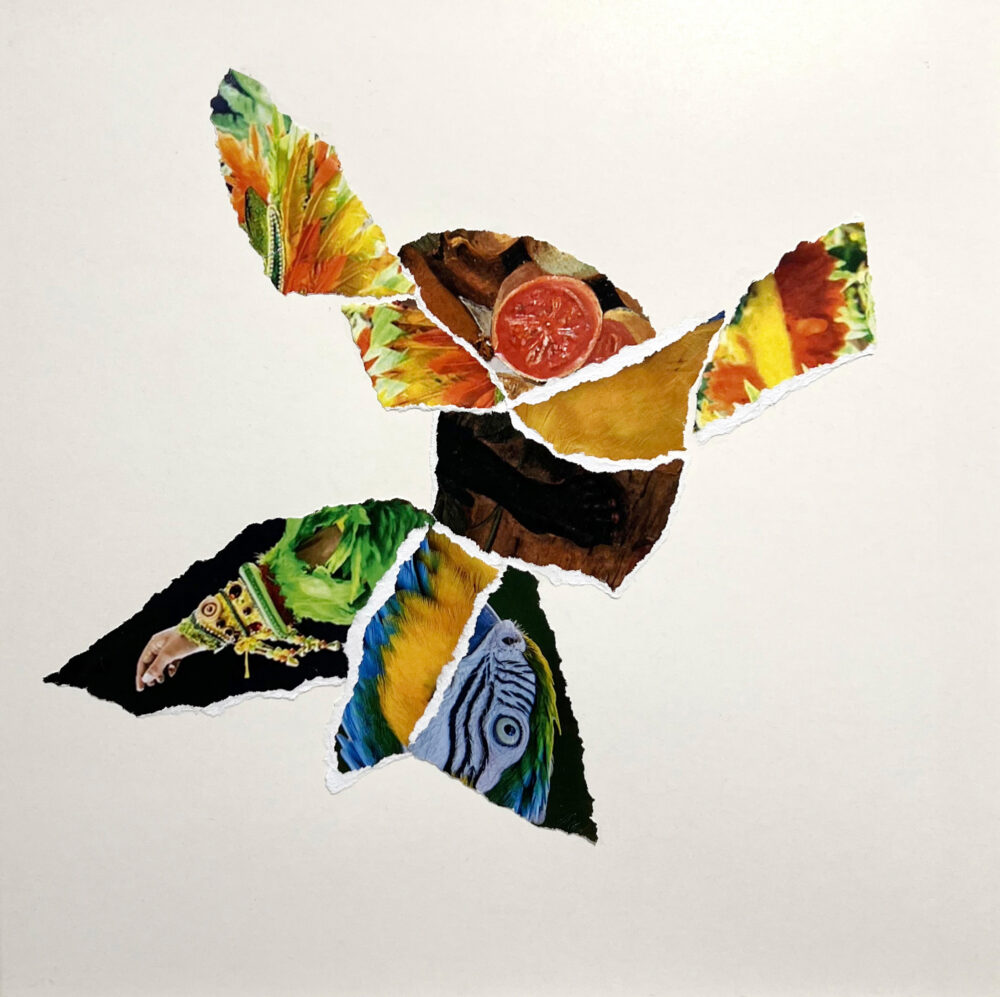
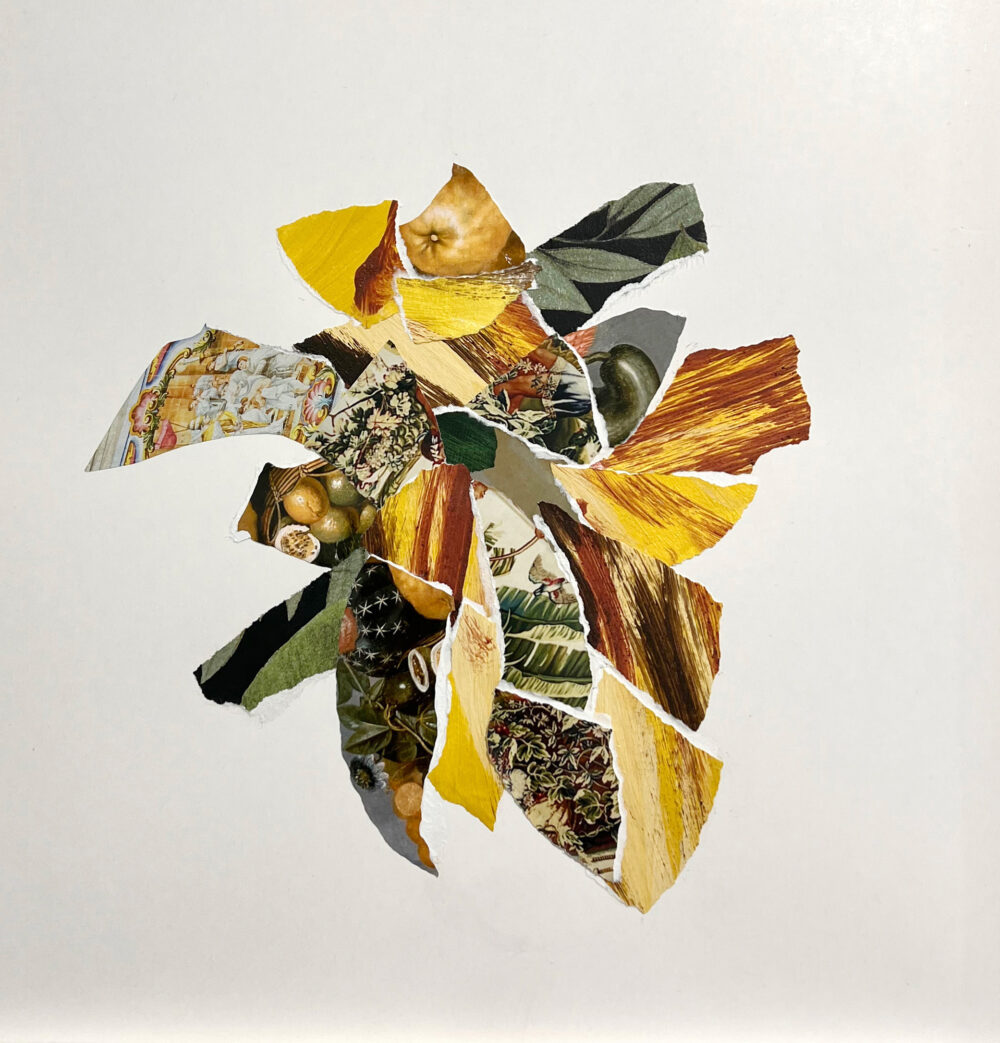
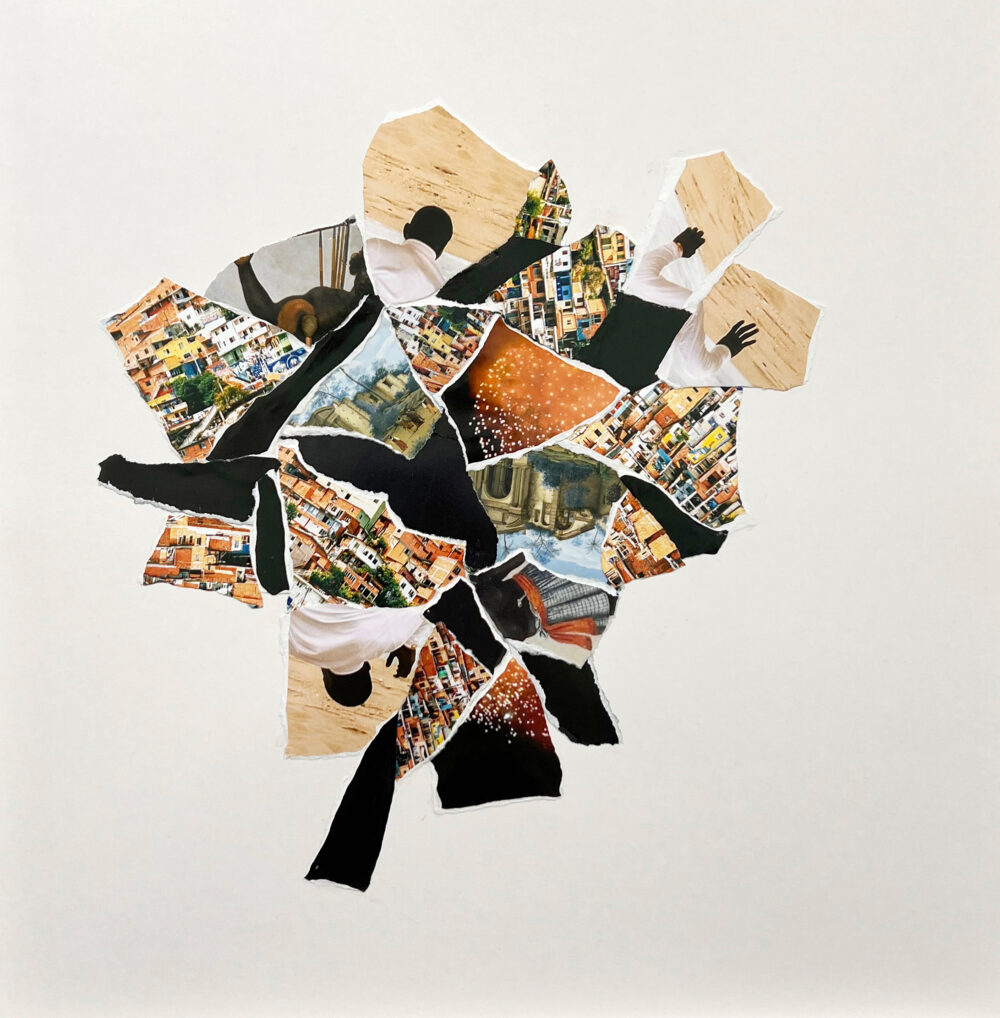
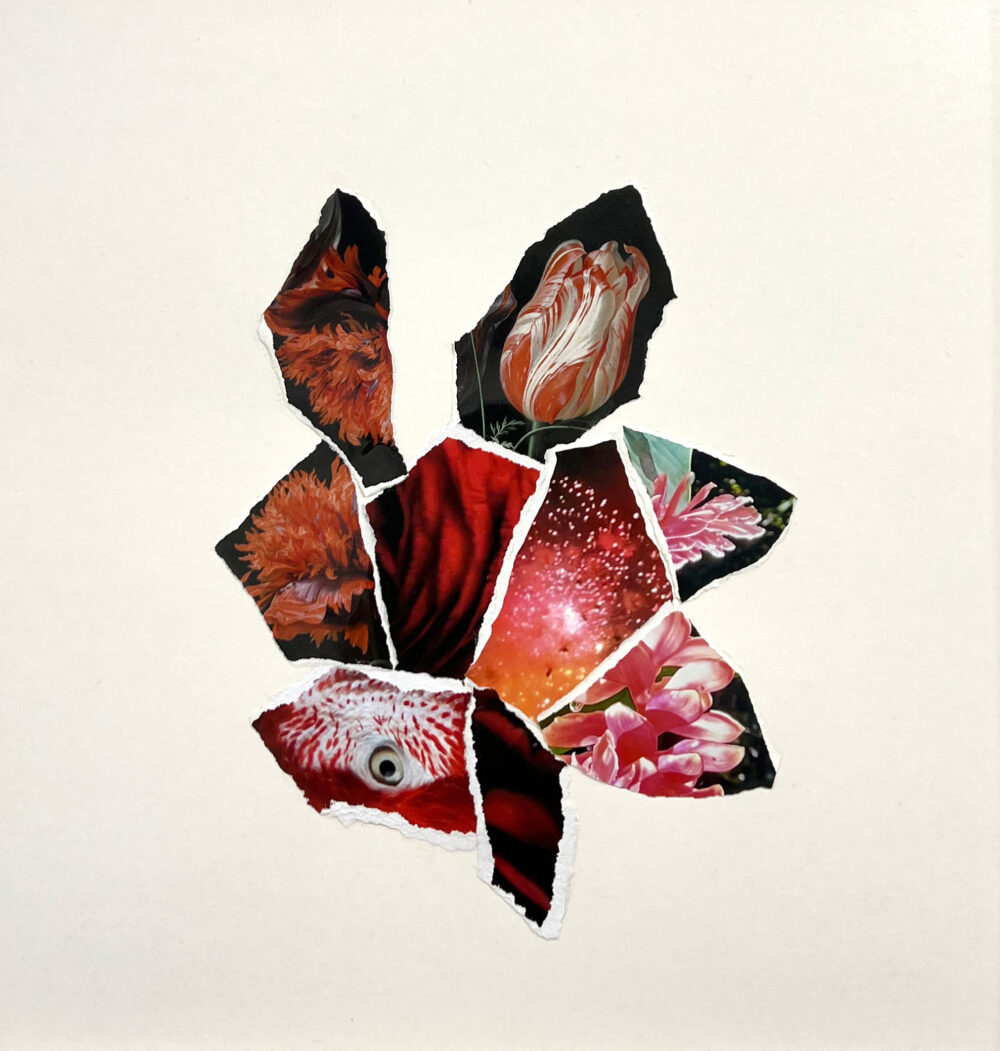
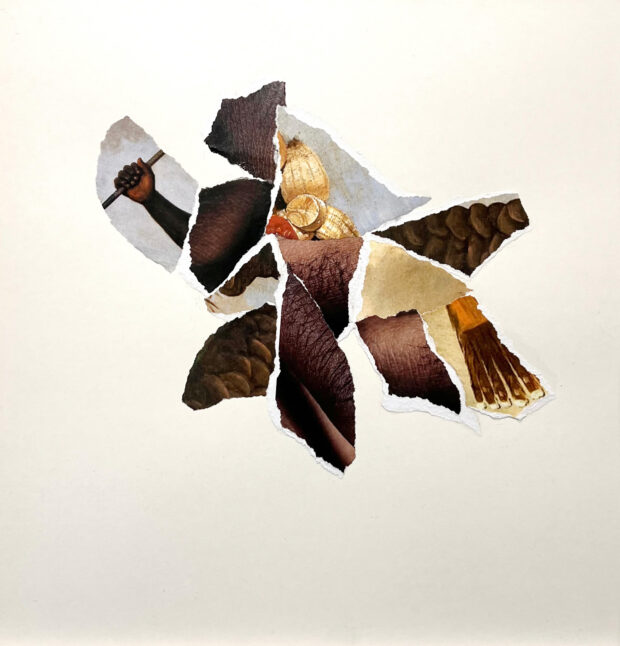
In Balbúrdia—a Portuguese word meaning noise, confusion, or mess—artist Patricia Werneck Ribas revisits this chapter of Brazilian history through collage. By deconstructing prints of well-known paintings by Albert Eckhout and Frans Post—artists sent to Brazil to document its landscape, flora, fauna, and people in service of the colonial project—and reassembling these fragments together with contemporary photographs of Brazil and pieces of painted paper, new hybrid images emerge. These compositions suggest creatures of Brazilian fauna and flora, challenging the colonial gaze and proposing alternative visual narratives.
The paintings of Eckhout and Post played a crucial role in legitimizing Johan Maurits’s authority as both a colonial and cultural leader. Their works contributed to early racial classification systems, embedding social hierarchies within European visual culture. In Brazil, reproductions of these images became some of the earliest visual representations of its people and environments, shaping national self-perception through the eyes of the colonizer.